
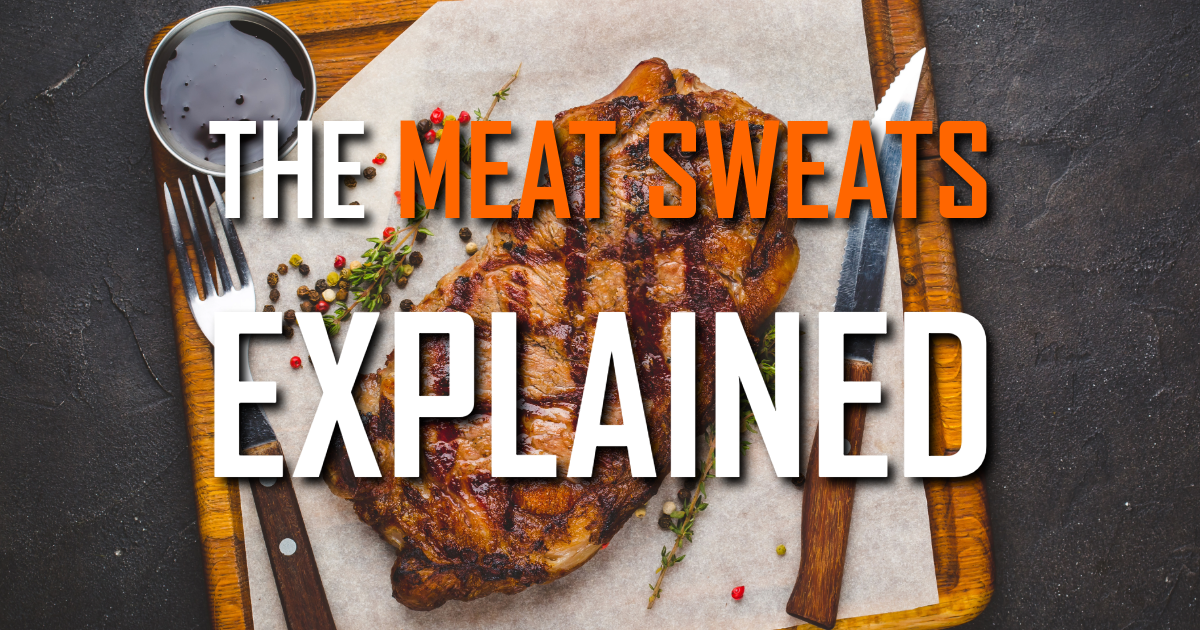
The Meat Sweats Explained: Why Protein Makes You Hot After Eating
If you’ve ever demolished a heroic ribeye and then, twenty minutes later, felt like your body quietly switched into sauna mode, congratulations. You’ve experienced the meat sweats.
If you’ve ever demolished a heroic ribeye and then, twenty minutes later, felt like your body quietly switched into sauna mode, congratulations. You’ve experienced the meat sweats.
It sounds like something invented at a backyard cookout, but there’s real biology behind it. The short version: large, protein-heavy meals make your body work harder to digest, and hard work creates heat.
Nothing’s wrong with you. You didn’t break yourself. Your internal chef just clocked in for a double shift.
Let’s peek behind the swinging kitchen doors.
What Are the Meat Sweats?
The meat sweats are that overheated, sometimes sweaty feeling some people get after eating a big meal—especially one loaded with protein like steak, brisket, or barbecue.
They usually show up 15 to 30 minutes after eating, right around the time your body decides digestion is now the main event.
Why Protein Makes You Hot After Eating
Your body deals with three main macronutrients: protein, carbohydrates, and fat. Each one comes with its own processing fee.
Protein is the diva.
If you eat 100 calories of protein, your body may burn 20 to 30 percent of those calories just breaking it down. Carbs are more relaxed, costing about 5 to 10 percent. Fat is the couch potato of the trio, barely asking for around 3 percent.
This calorie-burning process is called the thermic effect of food, and protein has the highest thermic effect by far.
So when you go all-in on protein, your system suddenly has to hustle. More effort means more heat, like revving an engine that was previously idling.
That heat is a big reason protein-heavy meals can make you feel hot and sweaty.
How Digestion Triggers the Meat Sweats
A large protein-rich meal can also activate your sympathetic nervous system, the same system responsible for fight-or-flight responses.
Your heart rate nudges upward. Your skin warms. Your body basically announces, We are doing something important here, and quietly flips on the sweat switch.
Meanwhile, your bloodstream starts playing traffic cop, redirecting more blood toward your digestive system. As blood concentrates in your core, your internal temperature rises. Your arms and legs may feel heavier or lazier, and you hit that familiar I need to sit down now phase.
This isn’t brain starvation—it’s resource reallocation. Your stomach is the main character now.
What Makes the Meat Sweats Worse?
A few things can turn a mild post-meal glow into full-on overheating:
Spicy food
Capsaicin can intensify sweating and amplify the heat response.
Capsaicin can intensify sweating and amplify the heat response.
Alcohol
Alcohol widens blood vessels, bringing warm blood closer to your skin and making you feel even hotter.
Alcohol widens blood vessels, bringing warm blood closer to your skin and making you feel even hotter.
Portion size and speed
Eating a huge meal quickly forces your digestive system to work harder, faster, and with more intensity.
Eating a huge meal quickly forces your digestive system to work harder, faster, and with more intensity.
All of these stack on top of the thermic effect of protein and push the meat sweats into overdrive.
How to Avoid the Meat Sweats After Eating
You don’t have to give up steak forever. A few simple tweaks can help reduce the meat sweats:
- Balance your plate: Pair protein with carbs and fiber so digestion doesn’t go from zero to maximum effort instantly.
- Slow down: Eating at a calmer pace gives your system time to keep up.
- Hydrate: Water helps regulate temperature better than alcohol.
- Watch the spice and booze combo: Delicious, yes. Sweat-inducing, also yes.
Because at the end of the day, a brisket should feel like a long, satisfying experience—not a race against your own metabolism.
5th May 2026
Recent Posts
-
Nashville Hot Honey Snack Sticks and Jerky: Sweet, Spicy, and Tangy
Nashville hot chicken built its reputation on a flavor people can't stop talking about: sticky hone …25th Sep 2026 -
How to Make Restructured Jerky with the All Around Jerky Maker
If you're looking to create that classic, gas-station-style jerky at home, but with better control …17th Jul 2026 -

How To Use a Meat Grinder (Step-by-Step Guide + Pro Tips)
Grinding your own meat at home gives you complete control over freshness, fat content, and flavor. F …16th Jun 2026