
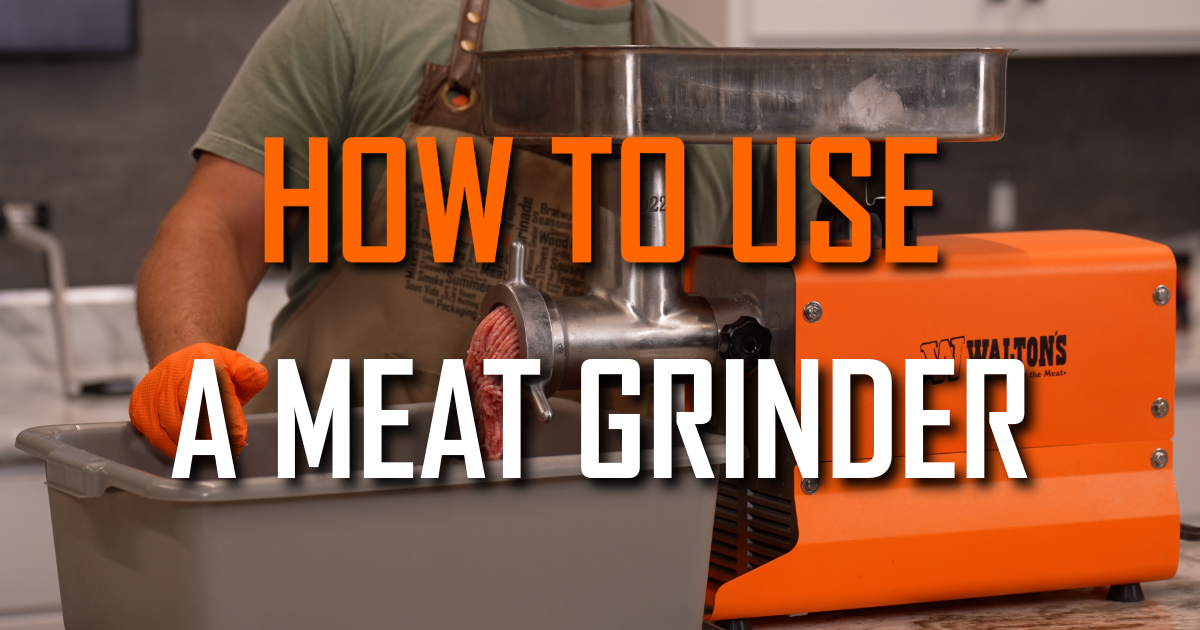
How To Use a Meat Grinder (Step-by-Step Guide + Pro Tips)
Grinding your own meat at home gives you complete control over freshness, fat content, and flavor. From burgers to bratwurst to custom sausage blends, grinding your own meat at home gives you full control over freshness, fat content, and flavor.
In this guide, we'll walk you through exactly how to use a meat grinder, and answer a common question: Can you grind frozen meat?
Why Grind Your Own Meat?
Before we dive into the steps, here's why it's worth doing:
- Better quality & freshness
- Control over fat content
- Custom blends (beef, pork, venison, etc.)
- Improved flavor and texture
- No fillers or additives
Equipment You'll Need
- Meat grinder (electric)
- Sharp knife
- Cutting board
- Meat (beef, pork, chicken, venison, etc.)
- Tray or bowl for catching ground meat
Optional but recommended:
- Grinder plates (coarse and fine)
- Grinder knife
Step-by-Step: How To Use a Meat Grinder
- Prepare the Meat
- Trim excess sinew, silver skin, and cartilage
- Cut meat into long strips (1–2 inches in diameter)
- Keep fat—this is essential for flavor and texture
Tip: A common ratio for burger meat is 80% lean / 20% fat
- Chill the Meat (Very Important)
Cold meat grinds better—this is where many beginners go wrong.
- Place stripped meat in the freezer for 20–30 minutes
- The meat should be firm but not solid for a traditional grind. (If you are using a one-shot attachment, use only chilled meat, not frozen.)
Why?
- Prevents smearing
- Helps the grinder cut cleanly instead of crushing
- Leads to better texture
- Set Up the Grinder
- Assemble according to the manufacturer's instructions
- Choose your grinding plate:
- Coarse plate: burgers, chili
- Fine plate: sausage, smoother texture
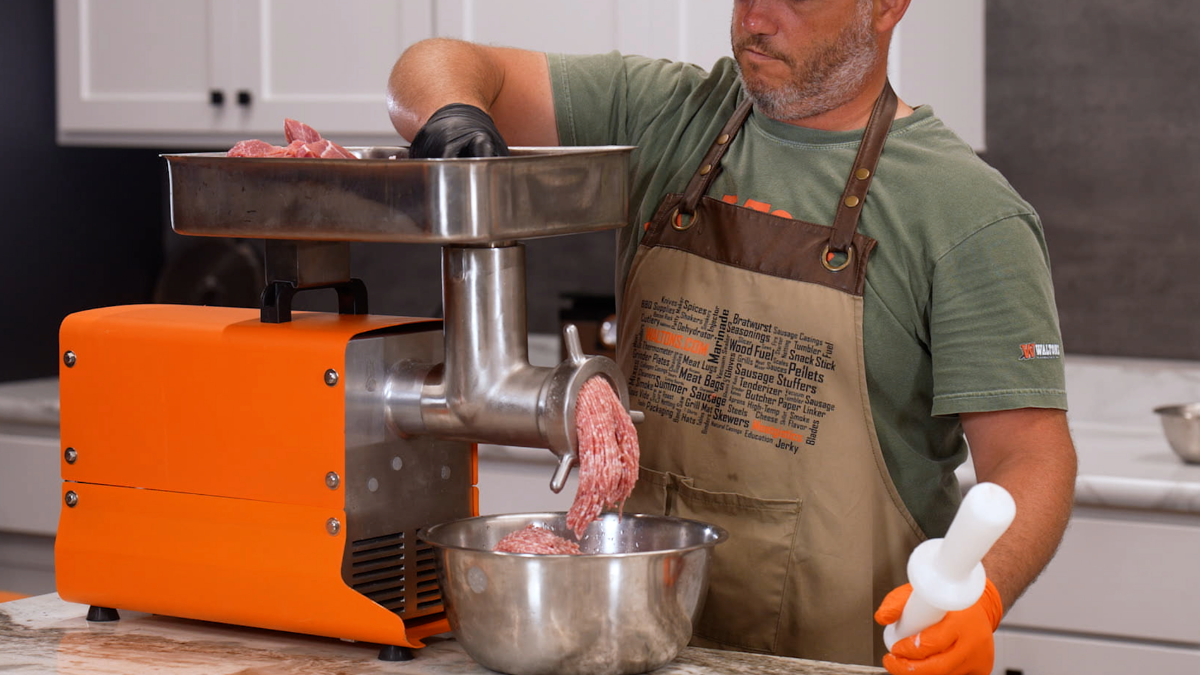
- Start Grinding
- Turn on the grinder
- Feed meat into the hopper
- Use the stomper, never your hands
Let the grinder do the work—don't force it.
- Grind Again (Optional)
For a finer texture:
- Run the meat through the grinder a second time
- Switch to a finer plate if desired
- Keep Everything Cold
If grinding large batches:
- Pause and refrigerate meat periodically (if necessary)
- Warm meat = poor texture
Can You Grind Frozen Meat?
This is one of the most common questions—and the answer is:
Partially frozen meat is ideal (for traditional Grinds)
Fully frozen meat is NOT recommended
Why Partial Freezing Works Best
- Helps the meat hold its shape
- Produces clean, defined fat particles
- Prevents smearing and mushy texture
Why Fully Frozen Meat Is a Problem
- Can damage your grinder
- Difficult to feed through properly
- Results in uneven grinding
Best Practice: Freeze meat for 20–30 minutes until it's firm but still sliceable.
Pro Tips for Better Grinding Results
Keep Equipment Cold
- Chill grinder parts before use
- Cold metal = better cuts
Use the Right Cut
- Chuck roast for burgers
- Pork shoulder for sausage
Don't Overwork the Meat
- Overhandling = tough texture
Season After Grinding
- Especially important for sausage
Common Mistakes to Avoid
- Grinding warm meat
- Using dull grinder blades
- Overloading the grinder
- Skipping the second grind when needed
What Can You Make With a Meat Grinder?
Now that you know how to use one, try:
- Burger blends
- Bratwurst
- Breakfast sausage
- Meatloaf mixes
- Venison blends
Final Thoughts
Learning how to use a meat grinder opens the door to better flavor, better texture, and complete control over your meat. The key takeaway? Keep everything cold—especially your meat.
And when it comes to frozen meat:
- Slightly frozen = perfect
- Fully frozen = avoid
Recent Posts
-

Nashville Hot Honey Snack Sticks and Jerky: Sweet, Spicy, and Tangy
Nashville hot chicken built its reputation on a flavor people can't stop talking about: sticky hone …25th Sep 2026 -
How to Make Restructured Jerky with the All Around Jerky Maker
If you're looking to create that classic, gas-station-style jerky at home, but with better control …17th Jul 2026 -

How To Use a Meat Grinder (Step-by-Step Guide + Pro Tips)
Grinding your own meat at home gives you complete control over freshness, fat content, and flavor. F …16th Jun 2026