
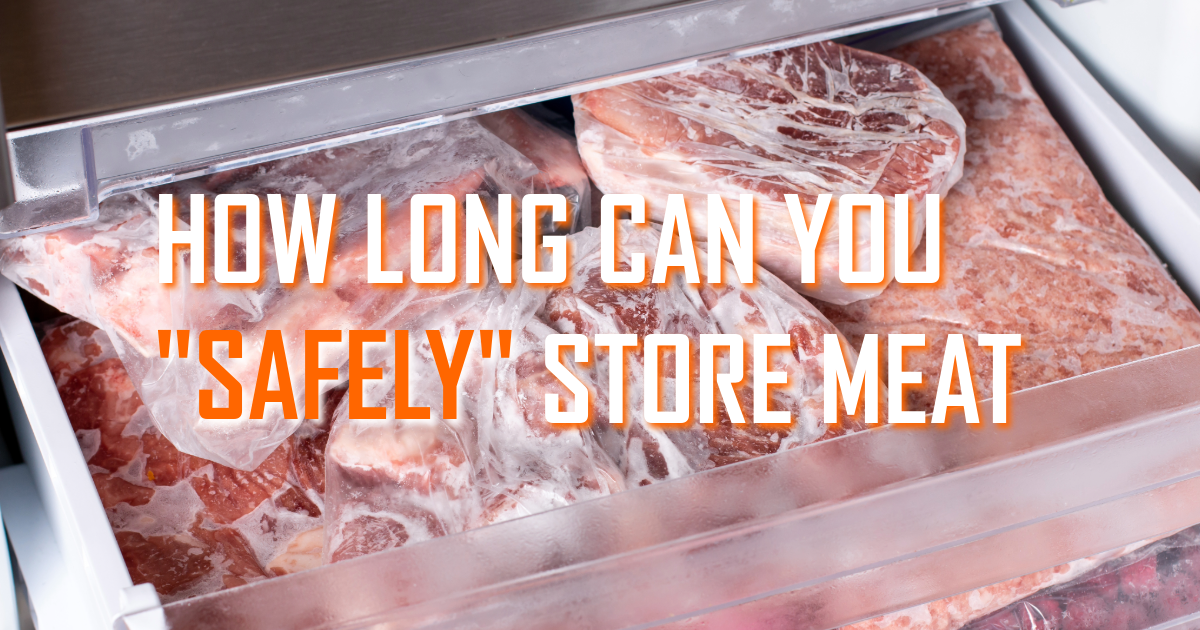
How Long Can You Safely Store Meat?
There is a world of difference between "safe" and "good" when it comes to frozen meat. If your meat has been properly vacuum-packed and kept at a steady frozen temperature, there really isn't a true safety limit. We have eaten products here from the bottom of our freezer that were going on 7 years old! Were they safe? Yes, they were. Were they good? No, no, they were NOT, but they didn't make anyone sick because they hadn't spoiled in the traditional sense of the word.
Quality, Shelf Life, and Best Practices for Freezing Meat
There is a world of difference between "safe" and "good" when it comes to frozen meat. If your meat has been properly vacuum-packed and kept at a steady frozen temperature, there really isn't a true safety limit. We have eaten products here from the bottom of our freezer that were going on 7 years old! Were they safe? Yes, they were. Were they good? No, no, they were NOT, but they didn't make anyone sick because they hadn't spoiled in the traditional sense of the word.
So, what actually happens when meat goes "bad" in a freezer? Well, if we have lots of cycles of it warming up and then cooling back down, then we get freezer burn, where we get dry spots on the meat. This is most common with whole muscle cuts and can ruin the quality of a steak or a roast. Freezer burn is a combination of dehydration and oxidation, and yes, it can occur in a vacuum bag, though it usually requires a packaging defect, like a tiny hole.
We also get oxidation, and here we can get some rancidity and stale flavors in our meat, still technically safe to eat, but not good! This is most noticeable with fat in the freezer; it tends to taste rancid when it oxidizes. This is why bacon often develops an off flavor when frozen for more than 6 months.
Lastly, if something has been frozen for over 6 months, there is a decent chance the texture is going to be subpar once it defrosts; nothing to be done about this; it just happens sometimes!
So, what can you do to extend the life of your frozen meat as much as possible? Well, with oxidation, the main thing we can do is remove oxygen from the equation by vacuum packing your meat. The issue is that there will always be some small amount of oxygen in the bag; you will never get it all out, but starting at 99% oxygen-free is a great way to preserve your meat.
For freezer burn, keeping your freezer at a steady temperature will save you tons of headaches here. When it warms up and then cools back down, we get cell degradation in the meat as it freezes, defrosts, and then freezes again. Don't leave your freezer door open for extended periods, basically!
Here are some general guidelines for different cuts of meat
Beef
- Steaks and roasts from 6-12 months
- Ground meat 3-4 months
Pork
- Chops and Roasts 4-6 months
- Sausage (uncured) 2-3 months
Poultry
- Whole bird 12 months
- Parts 6-9 months
Wild Game (lean meat)
- Steaks and Roast 8-12 months (leaner than beef, so lasts longer)
- Ground 3-4 months
Recent Posts
-

Nashville Hot Honey Snack Sticks and Jerky: Sweet, Spicy, and Tangy
Nashville hot chicken built its reputation on a flavor people can't stop talking about: sticky hone …25th Sep 2026 -
How to Make Restructured Jerky with the All Around Jerky Maker
If you're looking to create that classic, gas-station-style jerky at home, but with better control …17th Jul 2026 -

How To Use a Meat Grinder (Step-by-Step Guide + Pro Tips)
Grinding your own meat at home gives you complete control over freshness, fat content, and flavor. F …16th Jun 2026