
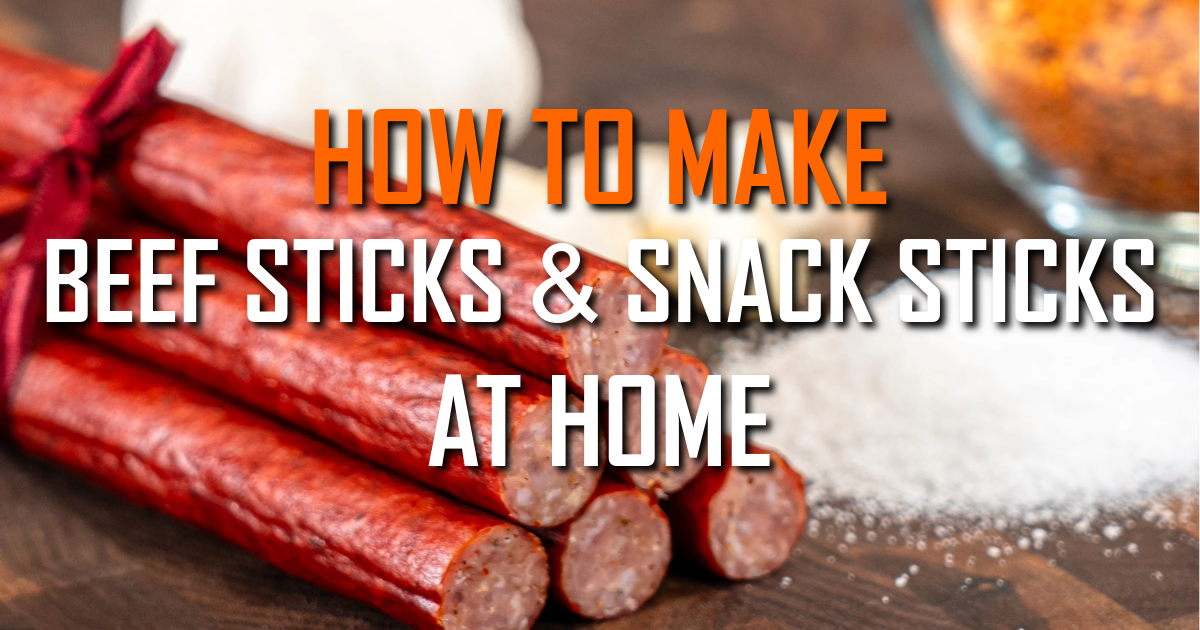
How to Make Beef Sticks & Snack Sticks at Home
If you’ve ever wanted to make your own beef sticks, snack sticks, or beef snack sticks at home, the process is easier than you might think once you understand the basics. Snack sticks are a type of cured sausage that are stuffed into small-diameter collagen casings, smoked low and slow, then cooled and bloomed for the best color, texture, and flavor.
Whether you’re making classic beef snack sticks, venison snack sticks, pork snack sticks, or wild game snack sticks, the process comes down to a few important steps: choosing the right meat and fat ratio, using cure correctly, mixing until you get a good bind, stuffing into collagen casings, smoking at the right temperatures, and cooling the sticks properly.
Here’s how to make homemade snack sticks from start to finish.
What Are Snack Sticks?
Snack sticks are cured sausage sticks that are usually smoked and stuffed into smaller collagen casings. They’re commonly made from beef, pork, venison, wild game, or a blend of meats.
The most popular versions are:
-
Beef sticks
-
Beef snack sticks
-
Venison snack sticks
-
Deer snack sticks
-
Pork snack sticks
-
Wild game snack sticks
-
Cheese snack sticks
-
Jalapeño cheddar snack sticks
The reason snack sticks are so popular is simple: they’re easy to eat, easy to package, and packed with flavor. They’re great for hunting trips, road trips, lunchboxes, tailgates, and high-protein snacks.
Because beef sticks and snack sticks are cured and smoked, cure is an important part of the process. Cure helps preserve the meat, develop color, and keep the product safe during smoking.
Best Meat for Beef Sticks and Snack Sticks
Snack sticks can be made from almost any protein, but the fat ratio matters.
You can make snack sticks with:
-
Beef
-
Pork
-
Venison
-
Elk
-
Deer
-
Pheasant
-
Wild game
-
Beef and pork blends
-
Venison and pork blends
For the best beef sticks or beef snack sticks, we recommend using pork fat in the blend, even if your main protein is beef or wild game. Pork fat has a clean flavor, a bright white color, and a creamy texture that works extremely well in sausage.
A good starting ratio is:
75% lean meat to 25% fat
You can go slightly higher, but avoid exceeding a 70/30 meat-to-fat ratio. Too much fat can cook out during smoking and leave a greasy mess. If you go too lean, the finished snack sticks can turn out dry and less flavorful.
For homemade beef sticks, that 75/25 ratio gives you a good balance of flavor, texture, and moisture.
More tips on avoiding dry snack sticks.
Best Casings for Snack Sticks
The most common casing for snack sticks is a smoked collagen casing.
For classic snack sticks and beef snack sticks, a 19 mm collagen casing is a great choice. It gives you that familiar snack stick size and bite.
If you're using 19 mm casings, a 12 mm stuffing tube usually works best. It is large enough to make stuffing efficient but still small enough for the casing to slide over easily.
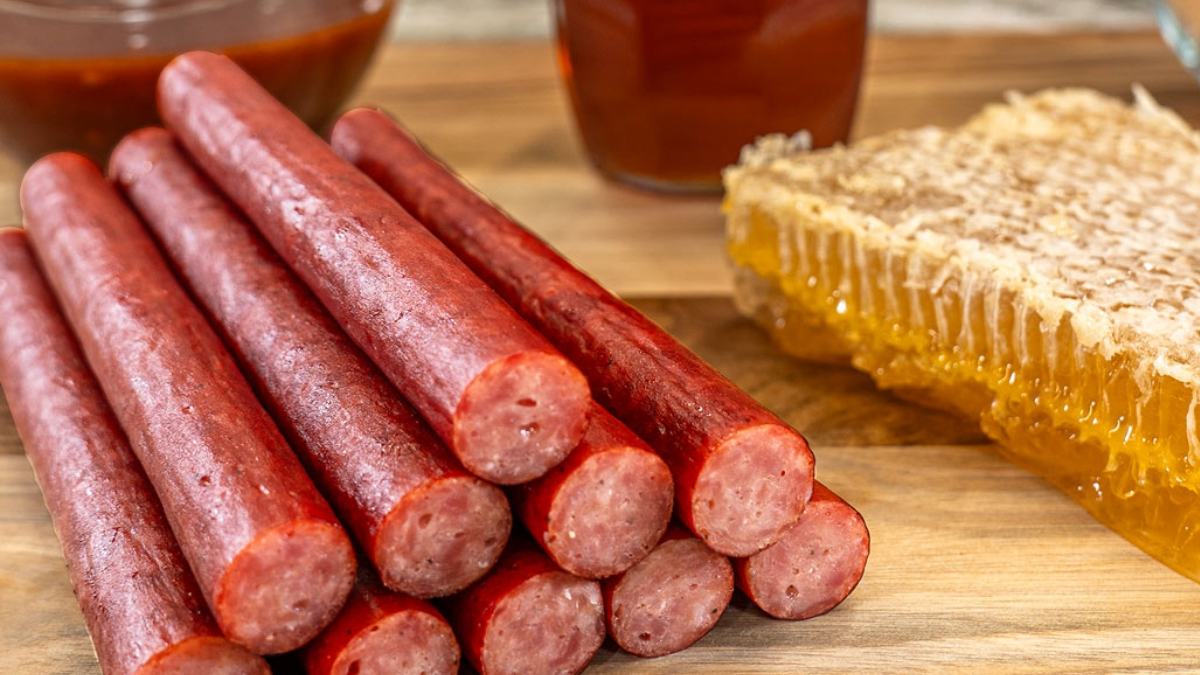
Snack Stick Seasoning and Add-Ins
The seasoning you choose will decide the flavor of your finished beef sticks or snack sticks.
Popular snack stick seasoning styles include:
-
Original snack stick seasoning
-
Jalapeño cheddar
-
BBQ
-
Garlic pepper
-
Teriyaki
-
Sweet and spicy
-
Dill pickle
-
Habanero
-
Pepperoni-style snack sticks
You can also add high-temp cheese to your snack sticks. Just make sure the cheese matches the seasoning. Cheddar works well with jalapeño, BBQ, or classic beef stick flavors, but it may not be the best fit for dill pickle.
Common snack stick additives include:
-
Cure
-
Sure Gel
-
Encapsulated citric acid
-
Sodium erythorbate
Sure Gel is a binder that helps hold the meat and fat together during smoking. It can be especially helpful when making beef sticks at home because it gives you a little more margin for error.
Using Cure in Beef Sticks and Snack Sticks
When making smoked snack sticks, cure is important.
Snack sticks are cooked in a warm, moist smoking environment. That environment is ideal for developing flavor, but it can also pose food safety concerns if the meat is not handled properly.
Cure helps keep the meat safe during the smoking process and also helps give beef snack sticks their classic cured color and flavor.
Always follow the directions for the specific cure and seasoning you're using. Do not guess or eyeball cure measurements.
Cure Accelerators for Snack Sticks
Two common cure accelerators for snack sticks are encapsulated citric acid and sodium erythorbate.
Encapsulated citric acid helps lower the pH of the meat and gives snack sticks a tangy flavor. Some people love that tang, while others prefer a milder beef stick flavor.
Sodium erythorbate helps the cure penetrate the meat more quickly. It is very strong, so accurate measuring is important. If you're making smaller batches of beef sticks or snack sticks, a precision scale is a smart tool to have.
One important note: encapsulated citric acid should only be added during the last 60 seconds of mixing. If it is added too early, it can break down the protein bind and cause dry, crumbly snack sticks.
Step 1: Cut and Chill the Meat
Start by cutting your meat and fat into pieces small enough to fit into your grinder.
If you're making beef sticks with a traditional grinder, chill the meat until it is very firm, almost frozen. The meat should have some resistance when you squeeze it, but it should not be frozen solid all the way through.
Cold meat grinds cleaner and faster. It also helps keep the meat safer while you’re processing.
For snack sticks, a fine grind is usually best. A 1/8-inch grinder plate is commonly used for cured sausage and snack sticks.
Step 2: Grind the Meat
Grind the meat and fat together.
For homemade beef snack sticks, you want a fine, even grind. This helps create a smoother texture and allows the seasoning, cure, and fat to distribute evenly throughout the meat block.
If you're doing a double grind, keep the meat cold between grinds. The colder the meat stays, the better your final snack stick will turn out.
Step 3: Mix Until the Meat Gets Sticky
After grinding, add the meat to your mixer. Then add your seasoning, cure, water, cheese, and any additives except encapsulated citric acid.
Mix until the meat becomes sticky. This is called protein extraction, and it is one of the most important steps when making beef sticks or snack sticks.
You’ll know the meat is ready when:
-
It feels tacky and sticky
-
It stretches when pulled apart
-
It sticks to your hand when you turn your palm downward
That sticky texture helps hold the fat inside the snack stick during smoking. Without a good bind, the fat can render out, leaving dry sticks and greasy spots in your smoker.
Add encapsulated citric acid only during the final 60 seconds of mixing.
Step 4: Load the Stuffer
When loading your sausage stuffer, try to avoid air pockets.
Add the meat at an angle and press it down firmly as you go. This helps remove trapped air and makes stuffing smoother.
Air pockets can create gaps in your snack sticks, so take your time during this step.
Step 5: Stuff the Snack Sticks
Slide your collagen casing onto the stuffing tube and begin stuffing.
For properly stuffed beef sticks, the casing should look full and smooth, but not overly tight. You should faintly see the swirl pattern on the casing.
If the casing looks wrinkled, it may be understuffed. If it looks overly plump and tight, it may be overstuffed.
Overstuffed snack sticks can split or rupture during smoking, especially when hanging in the smoker.
Step 6: Rest or Smoke the Snack Sticks
If you used a cure accelerator, the snack sticks can go directly into the smoker after stuffing.
If you did not use a cure accelerator, hold the stuffed snack sticks in the cooler for about 12 hours before smoking.
This gives the cure time to work through the meat.
Step 7: Smoke the Beef Sticks Low and Slow
Smoking is where beef sticks and snack sticks develop their final flavor, color, and texture.
Start with a drying phase:
120°F for 1 hour to 1 hour and 20 minutes
During this phase:
-
Use no smoke
-
Use no humidity
-
Keep dampers open
-
Use a fan if available
After the drying phase, increase the smoker temperature gradually.
A basic snack stick smoking schedule looks like this:
-
120°F for 1 to 1 hour 20 minutes
-
130°F to 140°F for 1 hour
-
150°F with smoke and humidity
-
160°F for 1 hour
-
175°F until the sticks reach final internal temperature
Smoke the snack sticks until they reach:
-
160°F internal temperature for beef or pork snack sticks
-
165°F internal temperature for poultry or wild game snack sticks
Using humidity during the smoking process can help prevent the sticks from drying out and can help push through the stall faster.
If your smoker does not have humidity control, place a large water pan inside the smoker. Wet sponges in the pan can also help create more surface area for evaporation.
Step 8: Cool the Snack Sticks Quickly
Once your beef sticks reach the proper internal temperature, cool them quickly.
Use an ice bath or shower cycle. If using an ice bath, make sure it is a true ice bath:
50% ice and 50% water
Cold water alone is not enough. The goal is to stop the cooking process quickly so the sticks do not continue cooking and the casing does not separate from the meat.
Step 9: Bloom the Snack Sticks
After cooling, let the snack sticks sit at room temperature for about 1 ½ to 2 hours.
This step is called blooming.
Blooming helps beef snack sticks develop a deeper red color and better finished appearance.
After blooming, move the snack sticks to the cooler overnight.
The next day, let them sit at room temperature for at least an hour before vacuum sealing. If you vacuum seal them too soon, moisture can collect in the bag and shorten the shelf life.
How Should Finished Beef Snack Sticks Look?
Finished beef sticks should be firm but still pliable. They should have a good snap when you bite into them and a smooth casing on the outside.
A good snack stick should have:
-
A firm texture
-
A clean bite
-
A smoky flavor
-
A smooth casing
-
Good color development
-
No excessive grease-out
Some people like wrinkly snack sticks. If that's the look you want, you can use slightly more fat, add a little extra water, or slightly understuff the casing.
Most of the time, though, a smooth snack stick with a good pop is the goal.
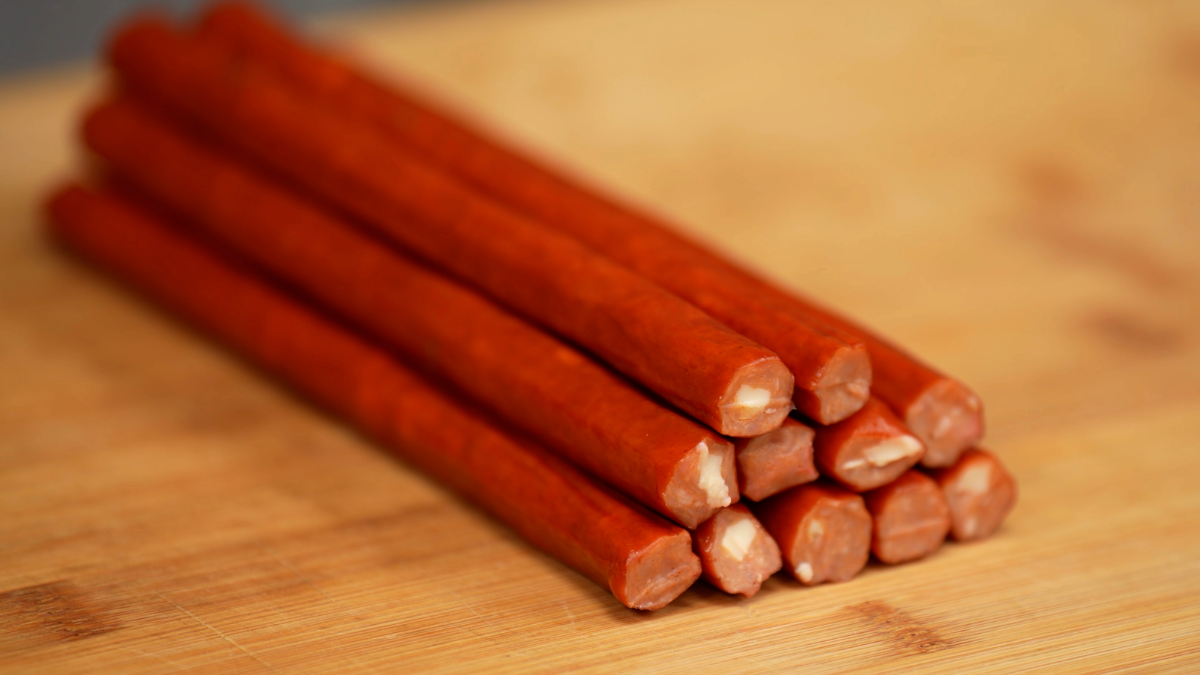
Why Are There Pink Spots on My Snack Sticks?
Small pink spots on the end of your snack sticks are usually nothing to worry about. This is often casing bleed, where color from the casing runs slightly into the meat near the ends.
As long as your beef sticks or snack sticks reach the proper internal temperature, those small pink spots are usually normal.
Final Tips for Making Homemade Beef Sticks
Making homemade beef sticks and snack sticks comes down to consistency.
Keep these tips in mind:
-
Keep your meat cold
-
Use the correct amount of cure
-
Use a good meat-to-fat ratio
-
Mix until the meat gets sticky
-
Avoid overstuffing the casing
-
Smoke low and slow
-
Use humidity during smoking
-
Cook to the correct internal temperature
-
Cool quickly
-
Let the sticks bloom before packaging
Once you get the process down, homemade snack sticks are one of the best ways to turn beef, pork, venison, or wild game into a flavorful, ready-to-eat snack.
Whether you're making classic beef sticks, spicy beef snack sticks, venison snack sticks, or cheese snack sticks, Walton's has the seasonings, casings, cure, grinders, stuffers, and supplies you need to make them right.
Visit Waltons.com to find everything but the meat, and check out Meatgistics.com for more tips, videos, and meat processing education.
Recent Posts
-
Nashville Hot Honey Snack Sticks and Jerky: Sweet, Spicy, and Tangy
Nashville hot chicken built its reputation on a flavor people can't stop talking about: sticky hone …25th Sep 2026 -
How to Make Restructured Jerky with the All Around Jerky Maker
If you're looking to create that classic, gas-station-style jerky at home, but with better control …17th Jul 2026 -
How To Use a Meat Grinder (Step-by-Step Guide + Pro Tips)
Grinding your own meat at home gives you complete control over freshness, fat content, and flavor. F …16th Jun 2026