
Advantages and disadvantages of styles of casings
When it comes to making great sausage, the casing is just as important as the seasoning or the cut of meat you choose. Casings don’t just hold everything together—they affect texture, bite, appearance, and even shelf life. Today, sausage makers have plenty of options: traditional natural casings made from animal intestines, collagen casings derived from beef skin that has been broken down into a liquid and processed, and newer synthetic varieties designed for consistency and convenience. Each type comes with its own set of advantages and drawbacks, from appearance and shape to ease of use and cost. In this post, we’ll break down the pros and cons of collagen, natural, and synthetic casings so you can choose the right one for your next batch.
Advantages and disadvantages of different casings
Different Casings
When it comes to making great sausage, the casing is just as important as the seasoning or the cut of meat you choose. Casings don’t just hold everything together—they affect texture, bite, appearance, and even shelf life. Today, sausage makers have plenty of options: traditional natural casings made from animal intestines, collagen casings derived from beef skin that has been broken down into a liquid and processed, and newer synthetic varieties designed for consistency and convenience. Each type comes with its own set of advantages and drawbacks, from appearance and shape to ease of use and cost. In this post, we’ll break down the pros and cons of collagen, natural, and synthetic casings so you can choose the right one for your next batch.
Natural Casings
Natural Casings refer to Hog, Sheep and even Beef intestines that have been taken from slaughtered animals, had the inside lining of the intestine removed and have been packed in salt, or a salt solution. People have been using intestine to make sausage for at least 5,000 years, the first references to this are found in ancient Greek writings. Little has changed about the process since then, we have gotten better at sanitation practices and removing the inner lining, but beyond that they are the same.
Advantages:
- When linking sausage nothing holds its form as well as natural casings. A few twists and they will hold a nice closed form when they are separated.
- Tradition is important to a lot of people and that carries over to sausage making as well, this is the traditional way of making sausage.
- Price per foot of a natural home pack sausage casing is the most cost effective way of making sausage.
Disadvantages
- These casings require preparation before they can be used. They come packed in salt to increase the shelf-life and they must be rinsed off, then flushed (where you run water through the interior of the casing) and finally soaked for at least 30 minutes in hot water.
- They have a curve to them that can make them more difficult to package and eat in a bun.
- They have more variability in the diameter of the casings, they are natural product, so some areas of the casing will be larger than others. The lack of consistency can cause problems for commercial sausage makers as it makes it harder to sell by the lb.
- They are prone to blowouts, a weak spot in the casing, or a pin hole is more likely to burst when stuffing than other options
- They can have whiskers, which are small organic string looking parts of the casing. It is just connective tissue, but it is a visual defect.
Collagen Casings
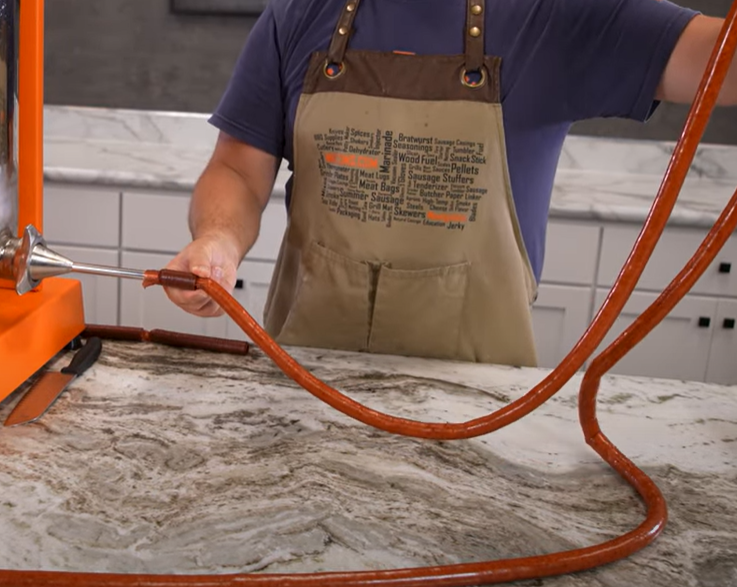
Collagen casings are one of the most widely used alternatives to natural casings. They’re made from the collagen layer of cow hides and other byproducts of beef or pork, then processed and extruded into uniform tubes. They were first used in the 1925 for sausage by a company that eventually merged with Devro, which is who Walton's gets their collagen casings from.
Advantages:
- These casings require no preparation, you can take collagen casings right out of the packages, place them on the stuffing tube and begin stuffing.
- Most types of collagen casings create a straight sausage with no curve, making them easier to use in a bun and package in vacuum bags or foam trays.
- These casings are less likely to have blowouts while stuffing.
- Some people prefer the knack, snap, or bite of a collagen casing.
Disadvantages
- They do not hold a twist when linking sausage. Unless you have some very specialized commercial equipment, collagen casings will come unwound when you separate the links by cutting the casings between the sausages. This can cause a bulb to be formed at the end of the sausage when cooked.
- They are more expensive than natural casings.
- If cooked at too high a temperature they have a tendency to peel off of the sausage, this is especially true when making breakfast sausages.
Synthetic Casings
These include Cellulose, Fibrous and Plastic casings. They can be used to make everything from Snacksticks to Summer Sausage and everything in-between. The vast majority of these casings will be inedible and will need to be removed before consuming the sausage.
Advantages
- Blowouts are extremely rare thanks to the strength of the material, and you can hold the casing tightly on the stuffing tube to achieve a nicely packed sausage.
- Fibrous casings have an extremely long shelf life and, when stored properly, can last for decades.
- Some casings, like fibrous ones, come pre-tied for easy hanging on smoke sticks.
- They are very strong, with a low chance of breaking during cooking.
Diadvantages
- The casing must be peeled off before eating.
- Fibrous casings require more preparation, as they need to be soaked in hot water for at least 30 minutes before use.
- Some varieties offer limited smoke penetration and poor moisture transfer.
Recent Posts
-

Nashville Hot Honey Snack Sticks and Jerky: Sweet, Spicy, and Tangy
Nashville hot chicken built its reputation on a flavor people can't stop talking about: sticky hone …25th Sep 2026 -
How to Make Restructured Jerky with the All Around Jerky Maker
If you're looking to create that classic, gas-station-style jerky at home, but with better control …17th Jul 2026 -

How To Use a Meat Grinder (Step-by-Step Guide + Pro Tips)
Grinding your own meat at home gives you complete control over freshness, fat content, and flavor. F …16th Jun 2026