
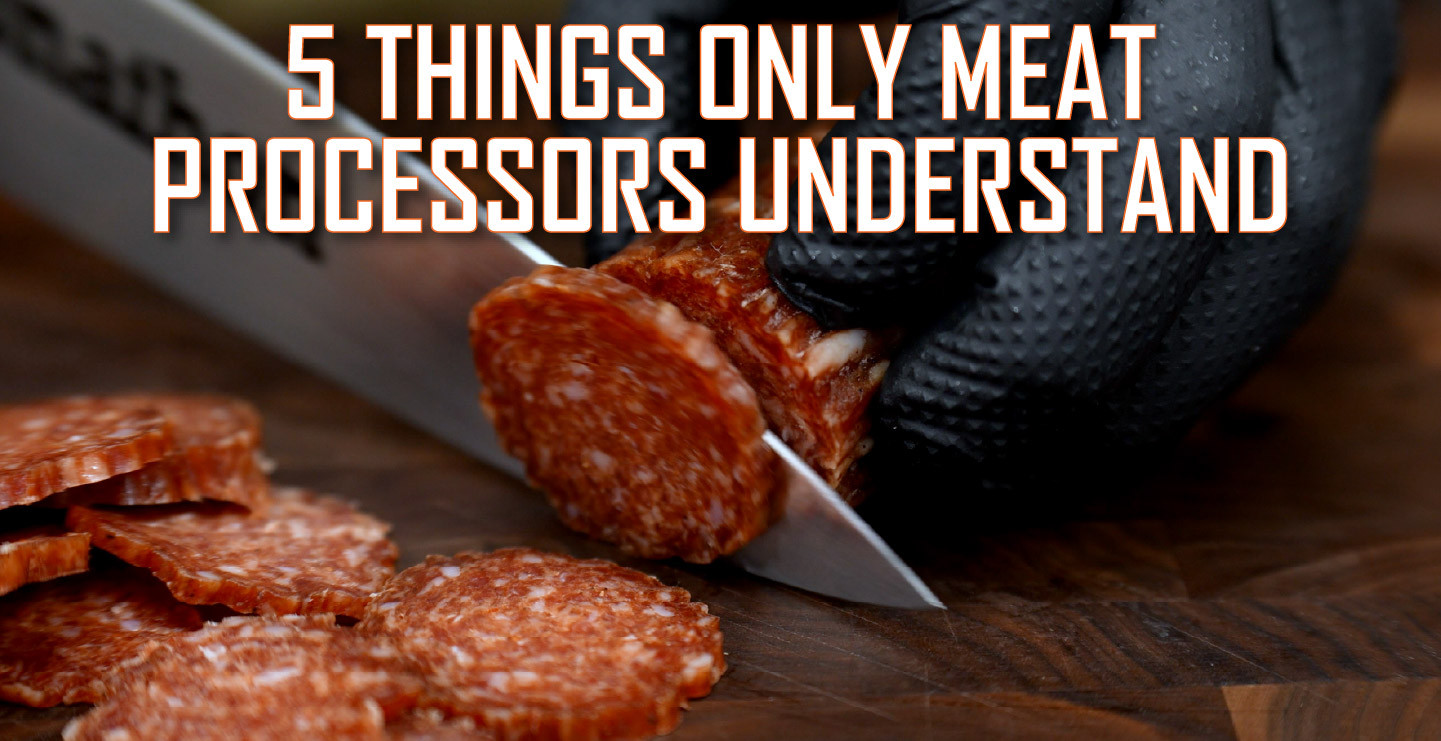
5 Things Only People Who Process Their Own Meat Understand
If you process your own meat, you already know that we can sometimes be a particular, even odd group of people. We have strong opinions on things that the average grocery shopper hasn't even heard of (is Encapsulated Citric Acid a cure accelerator or not?) and we take pride on the amount of blood on our hands while making sausage or jerky! You know the pain of seeing an experiment with your hard earned wild gameo
If you process your own meat, you already know that we can sometimes be a particular, even odd group of people. We have strong opinions on things that the average grocery shopper hasn't even heard of (is Encapsulated Citric Acid a cure accelerator or not?) and we take pride on the amount of blood on our hands while making sausage or jerky! You know the pain of seeing an experiment with your hard earned wild gameo(r the perfect pork butt) go badly, leaving you with an underwhelming finished product. But, you also know the joy that comes with making something exceptional and the peace of mind that comes with knowing how to provide for your family in the event of economical difficulties.
We also tend to look out for eachother a little more than some other groups, even when we disagree. Do you not have the needed nitrite cure to complete your 50 lb batch of snack sticks, or did your smoker die on you just as you were loading it? Well, chances are that you have someone in your neighborhood who'd happily lend a helping hand without expecting anything in return, and the chances are that person is a true home processor!
5 Things Only People Who Process Their Own Meat Understand
If you process your own meat, you already know that we can sometimes be a particular, or even odd group of people. We have strong opinions on things that the average grocery shopper hasn't even heard of (is Encapsulated Citric Acid a cure accelerator or not?) and we take pride on the amount of blood on our hands while making sausage or jerky! You know the pain of seeing an experiment with your hard earned wild game (or the perfect pork butt) go badly, leaving you with an underwhelming finished product. But, you also know the joy that comes with making something exceptional and the peace of mind that comes with knowing how to provide for your family in the event of economic difficulties.
We also tend to look out for each other a little more than some other groups, even when we disagree. Do you not have the needed nitrite cure to complete your 50 lb batch of snack sticks, or did your smoker die on you just as you were loading it? Well, chances are that you have someone in your neighborhood who'd happily lend a helping hand without expecting anything in return, and the chances are that person is a true home processor!
You have stong opinions on meat grinding!
This would confuse a "normal" person as it seems so straight forward, but to us it is the first step in making one of our favorite things and we all think that there are right and wrong ways to do it! You have probably checked someone's bon a fide by asking them some of these following questions and then judged them on their answers!
- Should you add your seasoning between the 1st and second grind?
- Does a bratwurst get a 3/16 on the 2nd grind or a 3/8" twice?
- Does the entire grinder head go into the freezer before grinding, or just plates and knives?
- How long should you go before replacing a grinder plate and knife?
- Do you like Dual Grind Systems, like the Walton's One Shot?
- Should you use your grinders stuffing function?
All these topics are things we have seen people die on a hill over! To be clear the answers are: Yes, 3/16th second grind, Entire head assembly goes in freezer, replace retail ones every 500 lb, Dual-Grind is awesome, and no it is a grinder not a stuffer!
Freezer space comes at a premium, and you can never have too much!
You want to move onto your next big batch, but you haven't yet finished your old batch.... we have all had this happen! Having enough freezer space is one of the most overlooked but essential parts of processing your own meat. Whether you’re breaking down a deer, hog, or a full beef, the yield adds up fast, and without proper storage you can end up rushing the process, cutting corners, or losing product to spoilage. A dedicated freezer gives you the flexibility to chill meat quickly for safer cutting, store trim until you’re ready to grind or make sausage and keep finished packages organized and protected for the long term.
It also lets you take advantage of bulk processing, running big batches of jerky, snack sticks, or ground meat without worrying about where everything will go. In short, adequate freezer space isn’t just convenient; it’s what makes the entire home-processing smoother, safer, and far more enjoyable.
You know the pain of a piece of equipment failing, or forgetting a supply at the worst time possibe moment!
This usually happens right when the meat is thawed, the grinder is humming, and you’re on a tight clock. One missing bag of cure, a dull knife, or a stuffer that decides today is the day to blow a gasket can derail an entire processing session. Not only does it slow you down, it adds stress to a job that already requires precision, timing, and food-safety awareness. That’s why being organized, checking your gear ahead of time, and keeping backups of the essentials can save you from a whole lot of frustration when you’re in the middle of a big batch.
Luckily, Walton's does have shipping options that will help mitigate these issues, BUT it can be expensive and even worse, we can't get it to you that day. That means you are putting meat back into a cooler, increasing the risk of something going wrong and costing you more money. So, check your equipment before thawing out any meat and make sure you keep some White Oil on hand to keep everything well lubricated!
You can identify the correct fat ratio just by looking at a sausage!
Well, you can at least once you’ve spent enough time grinding, mixing, and stuffing yourself. The way the meat binds together, even the pattern of fat flecks in the slice, even the sheen of the meat as you are mixing, they are all clues to knowing if you have the best % of fat in your mix. Too lean and the sausages look dry, crumbly, and almost matte; too much fat and you get that greasy gloss and wide, irregular pockets. But when it’s right, somewhere around that sweet-spot 20–30% range. You will see a tight, even distribution of fat that promises juiciness without being oily. It’s one of those skills you develop over time without even realizing it, and it makes you a better processor with every batch.
You know the pride that comes with a genuine compliment of something that you made - bonus points if it is from something you harvested!
There’s a whole different level of satisfaction in hearing someone rave about the flavor, the texture, or the craftsmanship of a sausage, roast, or jerky that you handled from field to freezer to plate. It’s not just about making good food; it’s about the hours of work, the skill, and the respect for the animal that went into it. When someone notices and appreciates that, it hits deeper than any store-bought product ever could. It’s validation of the entire process and it feels darn good.
Part of the reason that this feels so good is that it is a reward for all the hard work and knowledge we have acquired over YEARS of practice, experimenting and figuring things out for ourselves!
Recent Posts
-

Nashville Hot Honey Snack Sticks and Jerky: Sweet, Spicy, and Tangy
Nashville hot chicken built its reputation on a flavor people can't stop talking about: sticky hone …25th Sep 2026 -

How to Make Restructured Jerky with the All Around Jerky Maker
If you're looking to create that classic, gas-station-style jerky at home, but with better control …17th Jul 2026 -

How To Use a Meat Grinder (Step-by-Step Guide + Pro Tips)
Grinding your own meat at home gives you complete control over freshness, fat content, and flavor. F …16th Jun 2026