
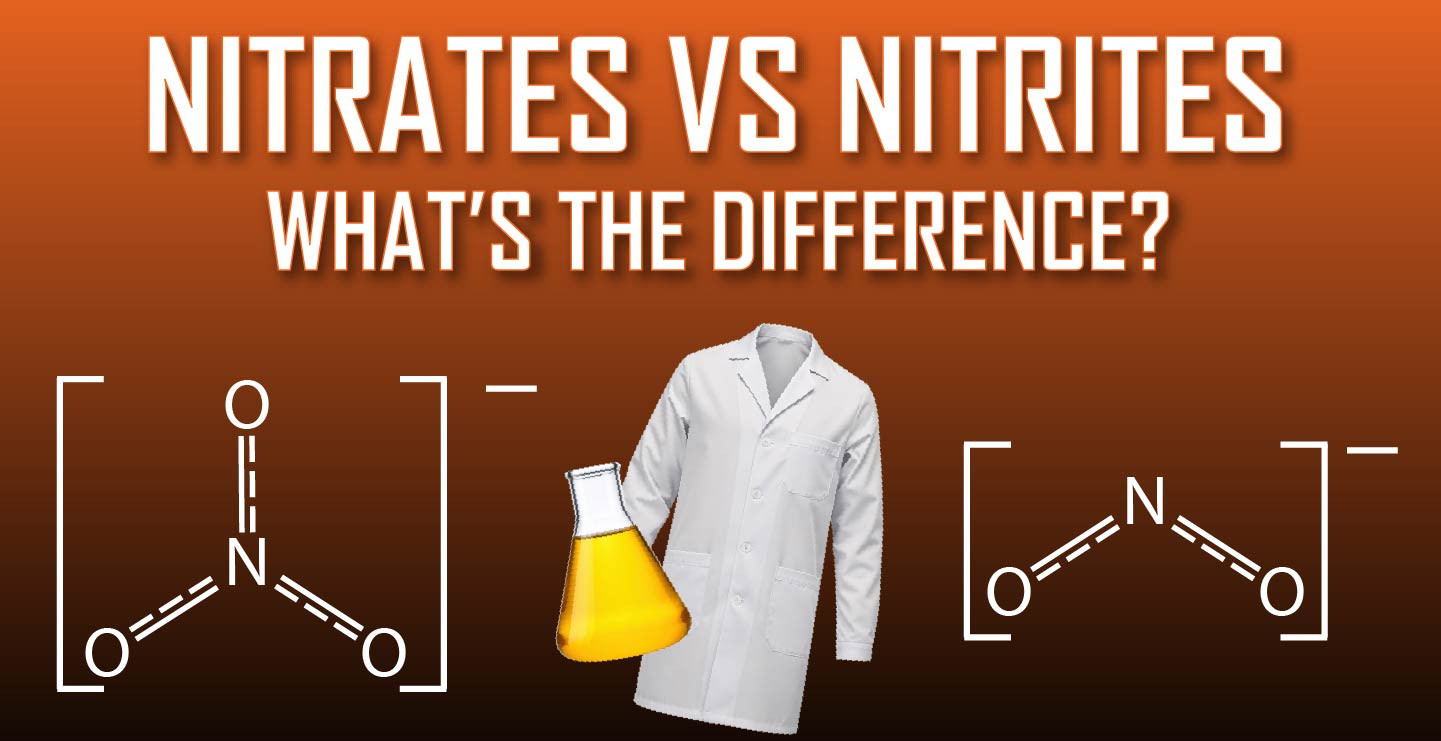
How Nitrites differ from nitrates - science of curing salts
We are going to get technical here in a way that will make some people's eyes glaze over but will excite meat nerds!
Cure #1, Sure Cure, Butcher's Cure, Prague Powder, Curing Salt, Insta-Cure, Quick Cure and a few other names all refer to basically the same thing, 6.25% sodium nitrite, salt, food dye and an anti-caking agent.
If you have found this blog post I would assume that you have already made your own Summer Sausage, Jerky, Ham or Bacon, and therefore are familiar with what cure is. However, if you don't, or you just want a deeper understanding of nitrites & nitrates and their function in meat processing we are going to take a deep dive into what they are and the science behind using them.
We are going to get technical here in a way that will make some people's eyes glaze over but will excite meat nerds!
Cure #1, Sure Cure, Butcher's Cure, Prague Powder, Curing Salt, Insta-Cure, Quick Cure and a few other names all refer to basically the same thing, 6.25% sodium nitrite, salt, food dye and an anti-caking agent.
If you have found this blog post I would assume that you have already made your own Summer Sausage, Jerky, Ham or Bacon, and therefore are familiar with what cure is. However, if you don't, or you just want a deeper understanding of nitrites & nitrates and their function in meat processing we are going to take a deep dive into what they are and the science behind using them.
Nitrates vs Nitrites
Even though they sound nearly identical and both show up in curing salts, nitrites (NO₂) and nitrates (NO₃) act very differently inside meat and understanding that difference is key to using the right one for the job.
| Feature | Nitrites (NaNO₂) | Nitrates (NaNO₃) |
|---|---|---|
| Main Function | - Act immediately to cure meat, prevent botulism, create cured color, and develop flavor. | - Serve as a slow-release source of nitrite during long cures. |
| Speed of Action | - Fast, works within hours or days. | - Slow, converted into nitrite by bacteria over weeks or months. |
| Typical Use | - For short-term cures: bacon, jerky, snack sticks, smoked sausage, hams that are cooked or smoked soon. | - For long-term dry-cured meats: prosciutto, country ham, salami, pepperoni, or anything aged for months. |
| Form in Cure | - Found in Sure Cure / Prague Powder #1 (6.25% sodium nitrite). And also some #2 Cure | - Found in Prague Powder #2 (6.25% sodium nitrite + 4% sodium nitrate + salt). |
| Role in Safety | - Immediately stops Clostridium botulinum (botulism). | - Keeps meat safe during extended curing by slowly generating more nitrite over time. |
| Color Effect | - Produces that bright, stable pink cured-meat color quickly. | - Doesn’t directly create color — it relies on converting to nitrite first. |
| Flavor Contribution | - Gives the signature cured flavor and helps prevent rancidity. | - Helps maintain that flavor and safety during long aging. |
Neither technically cures meat!
So, from reading the chart above you learned that Nitrates main function is to breakdown, or "reduce" into nitrites, which actually cures the meat, right? Well, no, not really, or at least not technically. Technically it is nitric oxide that is responsible for the cured meat color and flavor, as well as what keeps the meat safe from botulism.
But Nitrite doesn't break down right into nitric oxide directly. Instead, it breaks down into nitrous acid, which reduces into di-nitrogen trioxide, which is what turns into the nitric oxide. A small amount of the Nitric Oxide will convert back into nitrite kicking off the entire conversion process again. The regeneration of nitrite is what gives cure its lasting power inside your meat.
So, Nitrate- > Nitrite -> Nitrous Acid - > Nitric Oxide -> some portion of the Nitric Acid regenerates Nitrite!
What kickstarts the conversion?
If this all happened spontaneously then curing meat would be MUCH tougher than it is, we would never know if the package of cure we were using actually had already started the conversion, and therefore if it had any nitric oxide left. However, luckily a slightly acidic environment is a major trigger for nitrite to start reducing into nitrous acid.
Or, we can use specific additives that will kickstart the conversion even quicker. The most commonly used is Sodium Erythorbate. It is a very potent reducing agent that needs only 7/8 of an oz to accelerate the cure for over 100 lb of meat.
Effects of Heat on Color
During smoking or cooking, heat accelerates all of these reactions. Once the meat reaches about 130°F nitrite quickly changes into nitric oxide. This is why color changes happen during the cooking phase. Nitric oxide binds with myoglobin, which will form something called nitrosylmyoglobin. This is what will eventually "set" to that classic pink cured meat color.
Recent Posts
-
How to Make Turkey Jerky from Wild Game
If you're looking for a new way to use wild turkey breast, jerky might just become your go‑to. Turke …29th May 2026 -

How to Make Skinless Snack Sticks (No Casings, No Smoker)
If you love snack sticks but don't love dealing with casings or firing up the smoker, skinless snack …22nd May 2026 -

How to Make Beef Sticks & Snack Sticks at Home
If you’ve ever wanted to make your own beef sticks, snack sticks, or beef snack sticks at home, the …15th May 2026